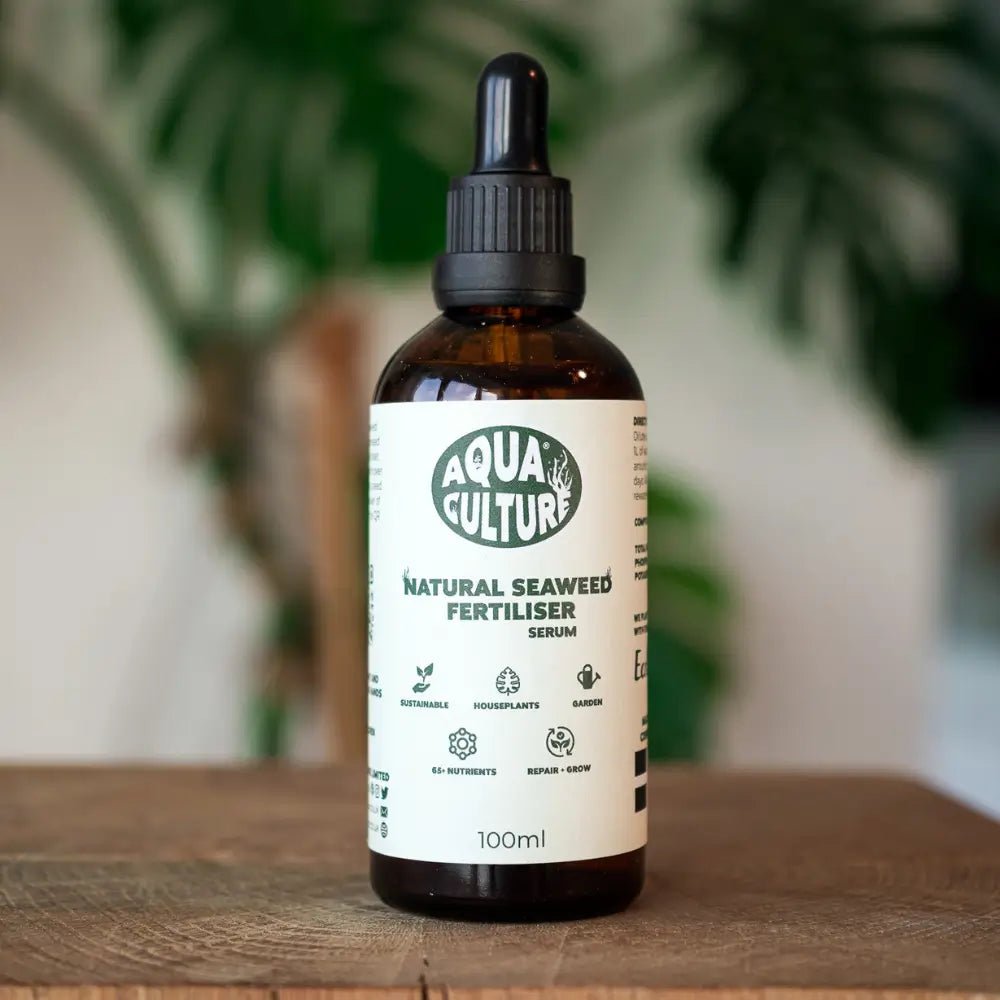
More UK gardeners and houseplant owners are moving from synthetic feeds to organic ones. The reasons are practical: organic feeds are gentler on soil life, harder to overdo and better suited to long-term plant health. One of the oldest of them is seaweed, used on British coastal farms for centuries and now back in favour for gardens and houseplants alike.
At AquaCulture we make our feeds from seaweed collected after it washes ashore on Cornish beaches. Nothing is cut from the seabed: we use what the tide leaves behind.
Why choose an organic fertiliser?
Synthetic fertilisers supply nutrients as soluble salts. They act fast, but they do little for the soil itself, and overfeeding is easy. Organic feeds work more slowly and support the living part of the soil: the microbes and fungi that make nutrients available to roots. Healthy soil grows stronger, more resilient plants, whether that is a windowsill herb pot or a full vegetable patch.
What makes seaweed different?
- A broad mix of minerals: seaweed naturally contains potassium, magnesium and a wide range of trace elements.
- Natural plant compounds: it contains compounds such as cytokinins and auxins, which are associated with root and shoot development.
- Support under stress: gardeners use seaweed to help plants through transplanting, dry spells and cold snaps.
- A light footprint: ours is made only from seaweed that has already washed ashore.
One honest caveat: seaweed is low in the main nutrients (nitrogen, phosphorus and potassium) compared with a conventional fertiliser. Think of it as a tonic for roots and soil rather than a replacement for everything else. Hungry crops such as tomatoes may still want a dedicated feed alongside it.
Seaweed compared with other organic feeds
| Feed | Strengths | Drawbacks |
|---|---|---|
| Manure | Improves soil and adds organic matter | Smell, variable nutrient content |
| Compost | Sustainable and can be made at home | Slow to release nutrients |
| Fish emulsion | High in nitrogen | Strong smell |
| Seaweed | Broad range of trace elements, gentle, little smell once diluted | Low in main nutrients, so best used as a tonic |
How to use seaweed fertiliser
- Houseplants: dilute 1 to 2ml of Seaweed Serum per litre of water and use every 2 to 4 weeks. Plants in pots need a much weaker feed than garden plants. A light mist of Sea Mist keeps leaves clean between waterings.
- Gardens: dilute 35ml of our 1L Biostimulant per litre of water and apply every 2 to 4 weeks through the growing season. It suits vegetables, flowers, fruit and lawns, on the soil or as a foliar spray.
- Larger scale: for allotments, smallholdings and farms, see our farm and grower range.
For more detail, read our seasonal guide to using seaweed fertiliser.
Sustainability and UK provenance
Every batch is made from seaweed cast ashore by the tide on the Cornish coast. During each collection we also remove plastic and litter washed up with it. The seaweed is cold-pressed in Cornwall, and the solids left over go into our soil products, so nothing is wasted.
Where to buy seaweed fertiliser in the UK
AquaCulture feeds are available online with free UK delivery over £30, and from stockists across the UK.
- Houseplant feeds: Seaweed Serum, Sea Mist and Shock Shot
- Garden feeds: 1L Biostimulant, Soil Topper and Plant Pints
In short
Seaweed is a gentle, time-tested organic feed that supports roots and soil rather than forcing growth. Used regularly and at the right strength, it suits everything from a single houseplant to a whole garden.